
AI-Driven DevSecOps: Self-Healing CI/CD Pipelines
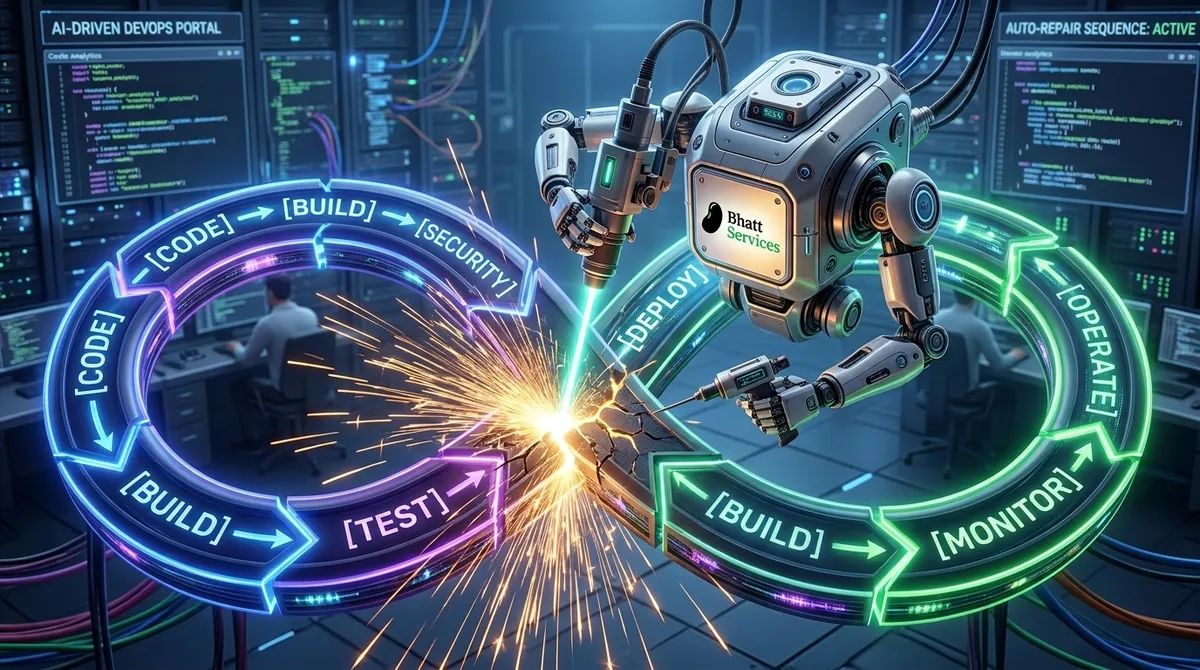
AI-Driven DevSecOps: Self-Healing CI/CD Pipelines
In today's fast-paced digital landscape, organizations are constantly seeking ways to improve the efficiency, reliability, and security of their software development and deployment processes. One approach that has gained significant traction in recent years is the integration of Artificial Intelligence (AI) and Machine Learning (ML) into DevSecOps practices. At Bhatt Services, we specialize in helping businesses leverage AI-driven DevSecOps to create self-healing Continuous Integration/Continuous Deployment (CI/CD) pipelines that minimize downtime, reduce errors, and maximize productivity.
The Evolution of DevSecOps
Traditional DevSecOps practices have focused on integrating security into the development and deployment process, often relying on manual testing, code reviews, and compliance checks. However, as the complexity and velocity of software development have increased, these manual approaches have become insufficient. The introduction of AI and ML has revolutionized DevSecOps by enabling automation, predictive analytics, and real-time monitoring. By leveraging AI-driven tools and techniques, organizations can now identify and remediate security vulnerabilities, detect anomalies, and optimize their CI/CD pipelines for maximum efficiency.
Key Components of AI-Driven DevSecOps
An AI-driven DevSecOps framework typically consists of several key components, including AI-powered testing and validation, automated security scanning and compliance checking, and predictive analytics for anomaly detection and incident response. Additionally, AI-driven DevSecOps often involves the use of ML-based chatbots and virtual assistants to facilitate communication and collaboration among development, security, and operations teams. By integrating these components, organizations can create a seamless, automated, and intelligent DevSecOps pipeline that minimizes manual errors, reduces security risks, and maximizes the speed and quality of software delivery.
Self-Healing CI/CD Pipelines: The Future of Software Development
One of the most significant benefits of AI-driven DevSecOps is the ability to create self-healing CI/CD pipelines. These pipelines use AI and ML to detect and respond to errors, anomalies, and security incidents in real-time, minimizing downtime and reducing the risk of security breaches. Self-healing pipelines can also optimize themselves for maximum efficiency, automatically adjusting parameters such as testing frequency, deployment velocity, and resource allocation to ensure the smoothest possible delivery of software updates. By leveraging self-healing CI/CD pipelines, organizations can achieve unprecedented levels of agility, reliability, and security in their software development and deployment processes.
Real-World Applications and Benefits
The benefits of AI-driven DevSecOps and self-healing CI/CD pipelines are numerous and well-documented. For example, a recent study found that organizations that adopt AI-driven DevSecOps experience a 30% reduction in security incidents, a 25% decrease in downtime, and a 20% increase in development velocity. Additionally, AI-driven DevSecOps can help organizations improve compliance, reduce costs, and enhance customer satisfaction. Real-world applications of AI-driven DevSecOps include financial services, healthcare, e-commerce, and government, among others. As the technology continues to evolve, we can expect to see even more innovative applications and use cases emerge.
Implementing AI-Driven DevSecOps: Best Practices and Recommendations
Implementing AI-driven DevSecOps requires a strategic approach, careful planning, and a deep understanding of the underlying technologies and processes. Some best practices and recommendations for implementing AI-driven DevSecOps include starting small, focusing on high-impact areas, and leveraging cloud-based services and platforms. Additionally, organizations should prioritize cultural and organizational change, ensuring that development, security, and operations teams are aligned and collaborative. By following these best practices and recommendations, organizations can successfully adopt AI-driven DevSecOps and achieve the many benefits that this approach has to offer.
Conclusion
In conclusion, AI-driven DevSecOps and self-healing CI/CD pipelines represent the future of software development and deployment. By leveraging AI and ML, organizations can create automated, intelligent, and secure DevSecOps pipelines that minimize errors, reduce security risks, and maximize the speed and quality of software delivery. At Bhatt Services, we are committed to helping businesses adopt and implement AI-driven DevSecOps, and we look forward to continuing to innovate and push the boundaries of what is possible in this exciting and rapidly evolving field.