
Digitizing Brick-and-Mortar Retail: 3D Rendering and AR Integrations
The integration of 3D rendering and augmented reality (AR) is revolutionizing the brick-and-mortar retail landscape, enabling businesses to create immersive and interactive customer experiences that drive engagement and sales. As a premier agency specializing in digitizing retail spaces, Bhatt Services is at the forefront of this technological shift, helping retailers to harness the power of 3D rendering and AR to stay ahead of the competition.
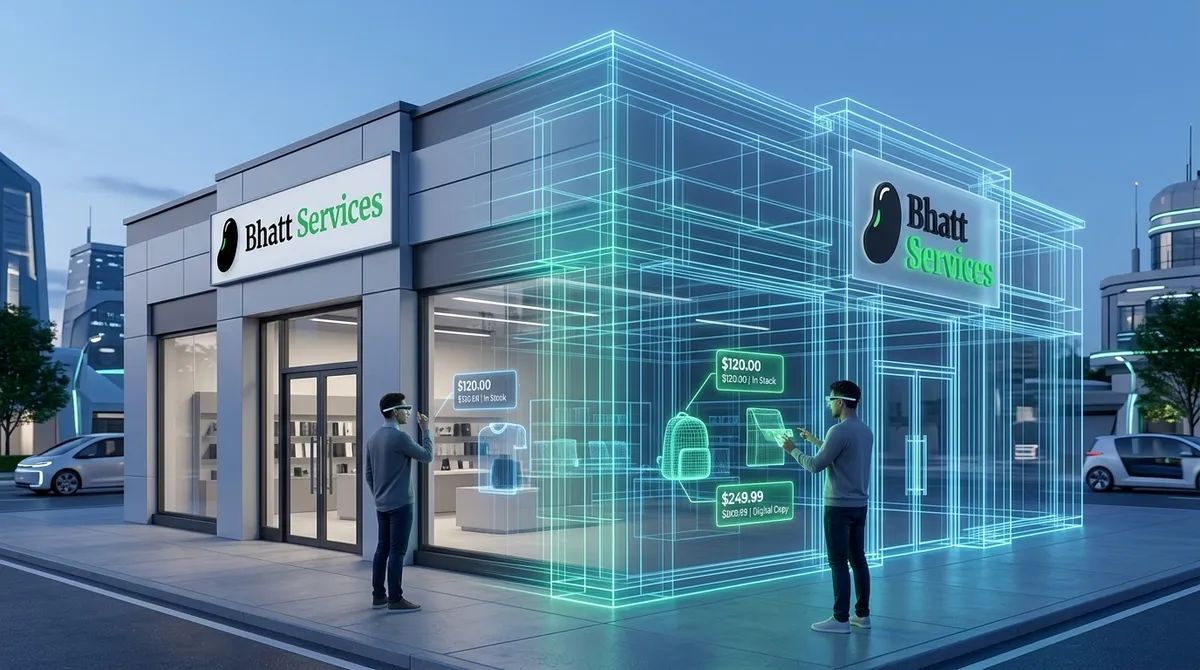
Introduction to Digitizing Brick-and-Mortar Retail
The retail industry is undergoing a significant transformation, driven by the need to create immersive and engaging customer experiences that blend the physical and digital worlds. As consumers increasingly expect seamless interactions between online and offline channels, brick-and-mortar retailers must adapt to stay relevant. One key strategy for achieving this is through the integration of 3D rendering and augmented reality (AR) technologies. By leveraging these technologies, retailers can create interactive and immersive experiences that enhance customer engagement, drive sales, and ultimately, stay ahead of the competition.
The Role of 3D Rendering in Retail
3D rendering is a powerful technology that enables retailers to create highly realistic and detailed digital representations of their products, stores, and brand environments. This technology has numerous applications in retail, including product visualization, store design, and marketing campaigns. For instance, 3D rendering can be used to create interactive product demos, allowing customers to explore products from multiple angles and zoom in on specific features. This can be particularly effective for complex or high-value products, where customers may have difficulty understanding the product's features and benefits through traditional marketing materials.
Benefits of 3D Rendering in Retail
The benefits of 3D rendering in retail are numerous and well-documented. Some of the key advantages include:
- Increased customer engagement: Interactive 3D models can be used to create immersive and engaging customer experiences that drive sales and loyalty.
- Improved product visualization: 3D rendering enables customers to explore products in detail, reducing the risk of misinterpretation or misunderstanding.
- Enhanced store design: 3D rendering can be used to create highly realistic digital models of store layouts, enabling retailers to optimize their store design and layout.
- Reduced costs: 3D rendering can reduce the need for physical prototypes, saving retailers time and money.
The Role of AR in Retail
Augmented reality (AR) is a technology that enables retailers to overlay digital information and experiences onto the physical world. In retail, AR can be used to create interactive and immersive experiences that enhance customer engagement and drive sales. For example, AR can be used to create virtual try-on experiences, allowing customers to see how products would look on them without having to physically try them on. AR can also be used to provide customers with additional product information, such as reviews, pricing, and availability.
Benefits of AR in Retail
The benefits of AR in retail are numerous and well-documented. Some of the key advantages include:
- Increased customer engagement: AR experiences can be used to create immersive and interactive customer experiences that drive sales and loyalty.
- Improved customer satisfaction: AR can be used to provide customers with additional product information, reducing the risk of misinterpretation or misunderstanding.
- Enhanced store experience: AR can be used to create interactive and immersive store experiences, such as virtual scavenger hunts or product demos.
- Increased sales: AR can be used to drive sales by providing customers with personalized product recommendations and offers.
Case Studies: Successful Implementations of 3D Rendering and AR in Retail
There are numerous examples of retailers successfully integrating 3D rendering and AR into their businesses. For instance, IKEA has used AR to create an interactive catalog that allows customers to see how furniture would look in their homes before making a purchase. Similarly, Sephora has used AR to create a virtual try-on experience, allowing customers to see how makeup products would look on them without having to physically apply them. Bhatt Services has worked with numerous retailers to integrate 3D rendering and AR into their businesses, helping them to create immersive and interactive customer experiences that drive engagement and sales.
Technical Considerations for Implementing 3D Rendering and AR in Retail
Implementing 3D rendering and AR in retail requires careful consideration of several technical factors, including:
- Hardware and software requirements: 3D rendering and AR require significant computational power and specialized software.
- Data integration: 3D rendering and AR require access to high-quality product data, including 3D models, images, and product information.
- User experience: 3D rendering and AR experiences must be designed to be intuitive and user-friendly, with clear instructions and feedback.
- Integration with existing systems: 3D rendering and AR must be integrated with existing retail systems, including e-commerce platforms, point-of-sale systems, and customer relationship management systems.
Best Practices for Implementing 3D Rendering and AR in Retail
To ensure successful implementation of 3D rendering and AR in retail, retailers should follow several best practices, including:
- Define clear goals and objectives: Retailers should clearly define what they want to achieve with 3D rendering and AR, whether it's to increase customer engagement, drive sales, or improve customer satisfaction.
- Conduct thorough testing: Retailers should thoroughly test their 3D rendering and AR experiences to ensure they are intuitive, user-friendly, and free of technical issues.
- Provide training and support: Retailers should provide training and support to employees to ensure they are comfortable using 3D rendering and AR technologies.
- Monitor and evaluate performance: Retailers should continuously monitor and evaluate the performance of their 3D rendering and AR experiences, making adjustments as needed to optimize results.
Conclusion
The integration of 3D rendering and AR is revolutionizing the brick-and-mortar retail landscape, enabling businesses to create immersive and interactive customer experiences that drive engagement and sales. As a premier agency specializing in digitizing retail spaces, Bhatt Services is at the forefront of this technological shift, helping retailers to harness the power of 3D rendering and AR to stay ahead of the competition. By following best practices and considering technical factors, retailers can ensure successful implementation of 3D rendering and AR, driving business growth and success in the digital age. With the help of Bhatt Services, retailers can create immersive and interactive customer experiences that set them apart from the competition and drive long-term success.