
Generative UI: How AI is Erasing the Concept of Static Web Design
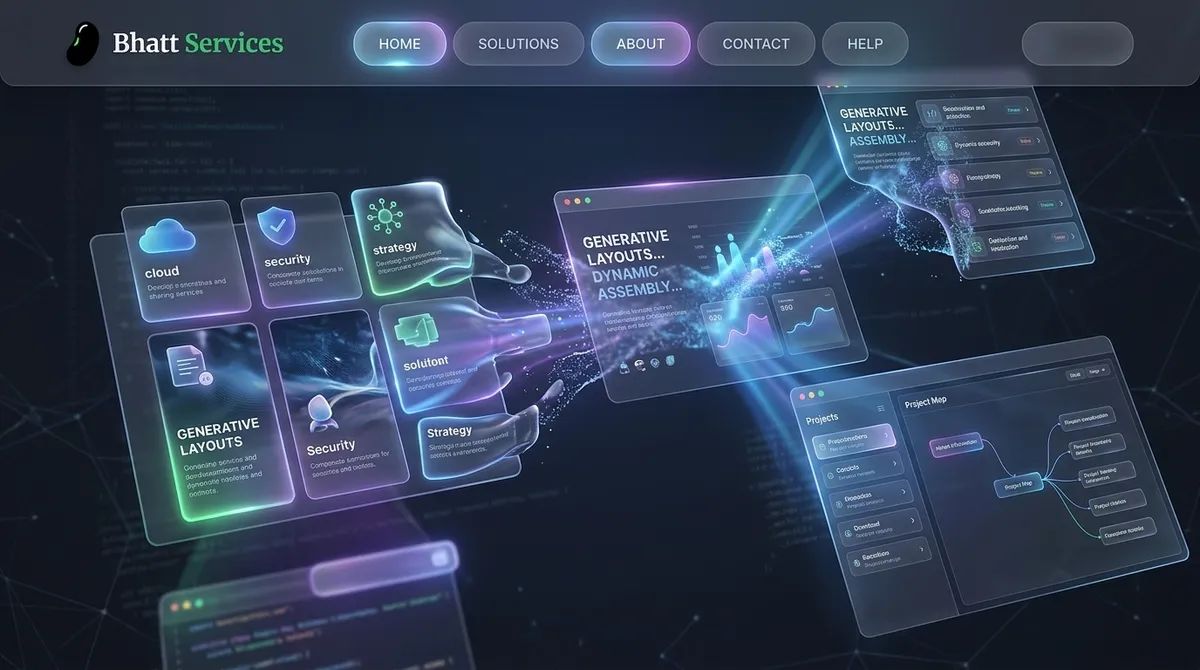
Generative UI: How AI is Erasing the Concept of Static Web Design
The web design landscape is undergoing a significant transformation, driven by the rapid advancement of Artificial Intelligence (AI) technologies. At Bhatt Services, we're witnessing a paradigm shift from traditional static web design to a more dynamic, adaptive, and personalized approach – Generative UI. This revolutionary concept is redefining the way we interact with digital interfaces, making them more intuitive, responsive, and user-centric.
What is Generative UI?
Generative UI refers to the use of AI algorithms and machine learning models to generate user interfaces dynamically, based on user behavior, preferences, and context. This approach enables the creation of personalized, adaptive, and responsive interfaces that can adjust to individual user needs, devices, and environments. By leveraging AI-powered tools and techniques, designers and developers can create more engaging, efficient, and effective user experiences.
Key Benefits of Generative UI
The benefits of Generative UI are numerous, and they're transforming the way we design and interact with digital interfaces. Some of the key advantages include: Improved user experience: Generative UI enables the creation of personalized, adaptive, and responsive interfaces that can adjust to individual user needs, devices, and environments. Increased efficiency: AI-powered tools and techniques can automate many aspects of the design process, reducing the time and effort required to create and maintain complex interfaces. Enhanced engagement: Generative UI can create more engaging, interactive, and immersive experiences, leading to increased user satisfaction and loyalty.
How AI is Enabling Generative UI
AI is playing a crucial role in enabling Generative UI, and several technologies are driving this trend. Some of the key AI-powered tools and techniques include: Machine learning models: These models can analyze user behavior, preferences, and context to generate personalized, adaptive, and responsive interfaces. Natural Language Processing (NLP): NLP enables the creation of conversational interfaces, chatbots, and voice assistants that can interact with users in a more human-like way. Computer vision: Computer vision enables the analysis and interpretation of visual data, allowing for the creation of more intuitive, interactive, and immersive experiences.
Real-World Applications of Generative UI
Generative UI is being applied in various industries and domains, including: E-commerce: Personalized product recommendations, adaptive interfaces, and immersive experiences are enhancing the online shopping experience. Healthcare: AI-powered interfaces are being used to create personalized treatment plans, patient engagement platforms, and remote monitoring systems. Finance: Generative UI is being used to create personalized investment platforms, adaptive risk management systems, and immersive financial analytics tools.
Challenges and Limitations of Generative UI
While Generative UI offers many benefits, there are also challenges and limitations to consider. Some of the key concerns include: Data quality: AI algorithms require high-quality, diverse, and relevant data to generate effective interfaces. Bias and fairness: AI models can perpetuate biases and discriminate against certain groups, if not designed and trained carefully. Security: Generative UI can introduce new security risks, such as data breaches, phishing attacks, and unauthorized access.
Conclusion
Generative UI is revolutionizing the web design landscape, enabling the creation of personalized, adaptive, and responsive interfaces that can adjust to individual user needs, devices, and environments. As AI technologies continue to advance, we can expect to see even more innovative applications of Generative UI in various industries and domains. At Bhatt Services, we're committed to staying at the forefront of this trend, and we're excited to explore the endless possibilities that Generative UI has to offer.