Local SLMs on the Edge: Why 2026 Enterprise Workflows Are Shifting to On-Device Neural Engines
Analyzing the architectural migration from cloud-hosted frontier LLMs to on-device Small Language Models (SLMs) running on Apple M-Series and Snapdragon X Elite chips for privacy, zero cloud egress costs, and instant local execution.
Executive Summary & Architectural Overview
In 2026, the enterprise AI paradigm is undergoing its most significant architectural decentralization since the advent of cloud computing. For the past three years, businesses defaulted to routing every token through centralized cloud APIs hosted by OpenAI, Anthropic, or Google. However, the operational realities of massive cloud inference bills, data egress fees, strict regional data sovereignty regulations (GDPR, HIPAA, DPDP), and network latency bottlenecks have made centralized cloud inference unsustainable for routine enterprise tasks.
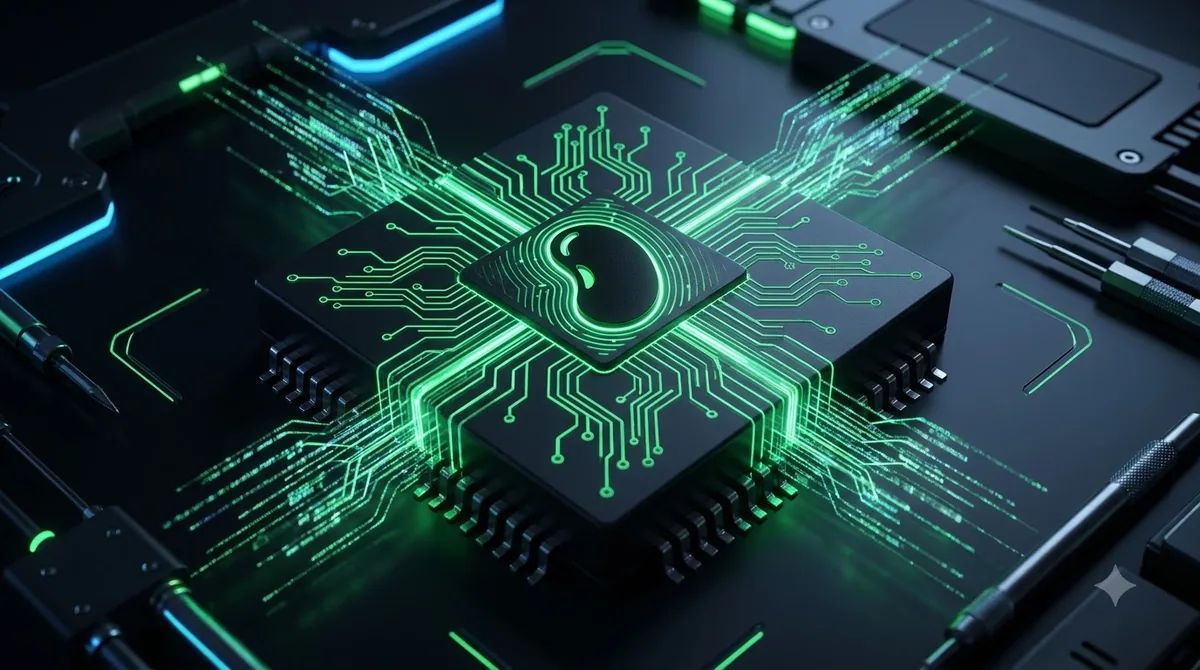
Enter Local Small Language Models (SLMs). Powered by cutting-edge neural architectures—including Microsoft Phi-4, Google Gemma 2 (2B and 9B), and Meta LLaMA 3.2 (1B and 3B)—and accelerated by dedicated Neural Processing Units (NPUs) delivering 45+ TOPS on Apple Silicon (M4/M5) and Qualcomm Snapdragon X Elite silicon, on-device AI now matches or exceeds the benchmark accuracy of GPT-3.5-era models while executing entirely on client hardware at zero marginal token cost. At Bhatt Services, we design edge-native workflows that keep sensitive operational data strictly within corporate firewalls while delivering instant sub-10ms response times.
The Cloud Inference Bottleneck vs. The Edge Reality
Every centralized cloud AI call incurs four non-negotiable penalties that degrade enterprise software experiences:
1. Automated PII & Sensitive Entity Sanitization
Before any analytical query leaves the client terminal to a cloud service, an on-device SLM parses the input text, identifies Social Security Numbers, corporate IP, patient IDs, and customer phone numbers, and replaces them with cryptographic tokens. The external cloud never sees unencrypted personal information.
2. Real-Time Offline Inventory & Billing
In our engineering work with mobile enterprise applications (such as our Billit inventory automation platform), on-device SLMs combined with mobile NPUs allow warehouse merchants and field engineers to scan physical receipts, execute text-to-inventory conversions, and extract line-item pricing without cellular reception.
3. Local Intelligent Search & Semantic Autocomplete
Local SLMs index internal code repositories, client communications, and active project notes into local SQLite vector stores, delivering instant search without transmitting internal proprietary data outside the workstation.
Engineering Edge AI: Runtime Stack & Quantization
To achieve sub-20ms latency on edge hardware, the software stack must bypass heavy web runtimes and interface directly with native hardware APIs:
- 4-Bit Quantization (GGUF & AWQ): Utilizing post-training quantization techniques like AWQ (Activation-aware Weight Quantization), a 3.8-billion parameter model is compressed from 7.6GB down to just 2.1GB of RAM with less than 1.2% perplexity degradation.
- Direct Hardware Bindings: Leveraging Apple MLX on macOS and Qualcomm QNN on Windows Snapdragon devices allows models to execute directly on dedicated tensor hardware, leaving the primary CPU and GPU available for user interface rendering.
Frequently Asked Questions & Implementation Considerations
What is the difference between an LLM and an SLM?
A Large Language Model (LLM) typically ranges from 70 billion to over 1 trillion parameters and requires high-end data center GPUs (like NVIDIA H100s) to run. A Small Language Model (SLM) contains between 1 billion and 9 billion parameters, engineered through advanced knowledge distillation to run efficiently on consumer workstations, laptops, and mobile NPUs at zero marginal cloud cost.
Can on-device SLMs match cloud LLM accuracy?
For narrow, structured enterprise tasks—such as JSON extraction, data classification, PII sanitization, and text summarization—modern SLMs like Phi-4 and Gemma 2 match or exceed the accuracy of GPT-3.5 while executing with 10x lower latency and zero data leakage risk.
How does Bhatt Services integrate on-device SLMs with existing cloud architectures?
Bhatt Services implements a hybrid routing pattern: lightweight, privacy-sensitive tasks are processed locally on client devices via on-device SLMs, while heavy analytical syntheses are selectively routed through secure, zero-data-retention cloud frontier endpoints.