
Multi-Agent Coding Swarms: Orchestrating Autonomous Code Review, Migration, and Test Generation
Engineering multi-agent software development swarms that autonomously review code, refactor legacy architectures, and execute self-healing test suites through hierarchical planner-executor loops.
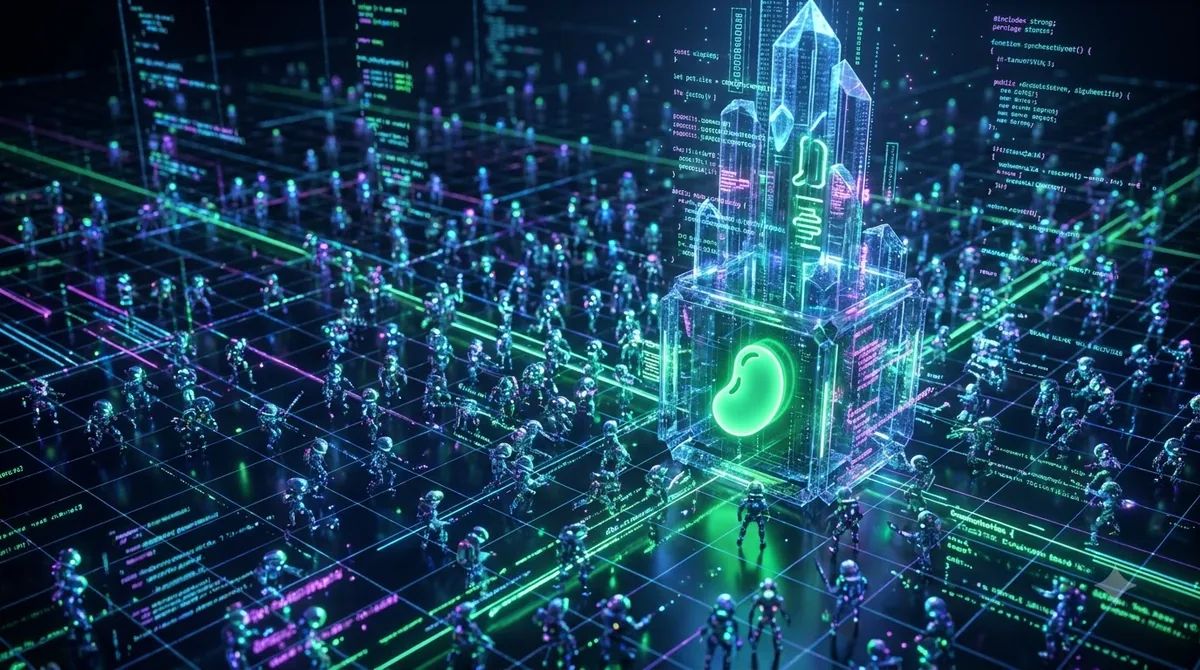
Executive Summary & Architectural Overview
In 2026, software development has evolved beyond individual AI code-completion autocomplete widgets. While tools like GitHub Copilot and Cursor boosted developer productivity by suggesting snippets, they remain fundamentally passive: they wait for human keystrokes, lack repository-wide holistic context, and cannot verify whether generated code breaks downstream integration tests.
The cutting edge of enterprise software engineering is defined by Autonomous Multi-Agent Coding Swarms. Instead of a single model attempting to write, review, and test code simultaneously, multi-agent architectures deploy specialized swarms organized into hierarchical roles: a Lead Architect Agent that analyzes the Abstract Syntax Tree (AST), a Task Decomposer that partitions epics into isolated modules, Code Writer Agents that implement feature branches, and an automated Testing & Linter Agent that executes compilation loops and fixes syntax errors autonomously. At Bhatt Services, we deploy multi-agent coding swarms that reduce legacy migration cycles from 9 months down to 3 weeks.
The Swarm Architecture: Hierarchical Planner-Executor-Verifier
Effective autonomous engineering requires strict division of labor. If a single model writes code and critiques its own work, confirmation bias causes it to overlook its own architectural flaws. A multi-agent swarm enforces cognitive separation:
1. The Lead Architect (Repository AST Parser)
Before writing any code, the Lead Architect parses the codebase into an Abstract Syntax Tree (AST) using tools like Tree-sitter. It maps all exported interfaces, database schemas, and shared utilities, building an internal dependency graph that prevents circular dependencies and breaking API modifications.
2. The Worker Agents (Isolated Branch Execution)
Worker agents operate in sandboxed scratch workspaces (isolated git worktrees). Each agent receives a single, strictly bounded objective: "Refactor the authentication module to replace legacy session cookies with WebAuthn credential verification while preserving existing user schema."
3. The Self-Healing Compiler Loop
The most powerful capability of modern coding swarms is the Self-Healing Loop:
When a type error occurs, the Testing Agent captures the exact line number and compiler diagnostic, dispatches the error trace to a Debugger Agent, applies the surgical fix, and re-executes the build. The swarm loops autonomously until compilation exits with code 0.
Enterprise Use Cases: Legacy Migrations & Automated Vulnerability Patching
Multi-agent coding swarms solve the most grueling, error-prone tasks that human engineering teams avoid:
1. Monolith to Microservices / Edge Migration
Migrating millions of lines of legacy PHP or Java monolith code into modern TypeScript and Next.js micro-frontends is historically cost-prohibitive. Swarms systematically convert endpoints, rewrite SQL queries into optimized ORM calls, and generate accompanying unit tests at scale.
2. Automated Zero-Day Security Remediation
When a critical vulnerability is published in an open-source dependency, the swarm scans every internal repository, upgrades the package, identifies breaking API changes caused by the upgrade, refactors affected call sites, and opens an approved, pre-tested pull request across hundreds of microservices within minutes.
Frequently Asked Questions & Implementation Considerations
What is a multi-agent coding swarm?
A multi-agent coding swarm is an AI engineering system composed of specialized, collaborating autonomous agents—such as planners, coders, linters, and reviewers—that collaborate to plan, write, test, and refactor software repositories with minimal human intervention.
How do coding swarms prevent bad code from reaching production?
Coding swarms employ dedicated verifier and reviewer agents that operate independently from the coder agents. Code must successfully pass automated compilation loops (e.g., tsc --noEmit), linting rules, security vulnerability scans, and unit test suites before being submitted as a pull request.
Can coding swarms understand large, complex codebases?
Yes. Modern swarms parse the repository's Abstract Syntax Tree (AST) and build relational dependency graphs, allowing them to track type signatures, imported modules, and database schemas across thousands of files without exceeding context window limits.