
The Architecture of Next-Generation Healthcare Portals: Telehealth, Patient Flow, and NABH Digital Compliance
Engineering high-availability digital health platforms for super speciality hospitals, incorporating real-time OPD triage, HIPAA/NABH compliance, and zero-latency patient records based on PSP Memorial.
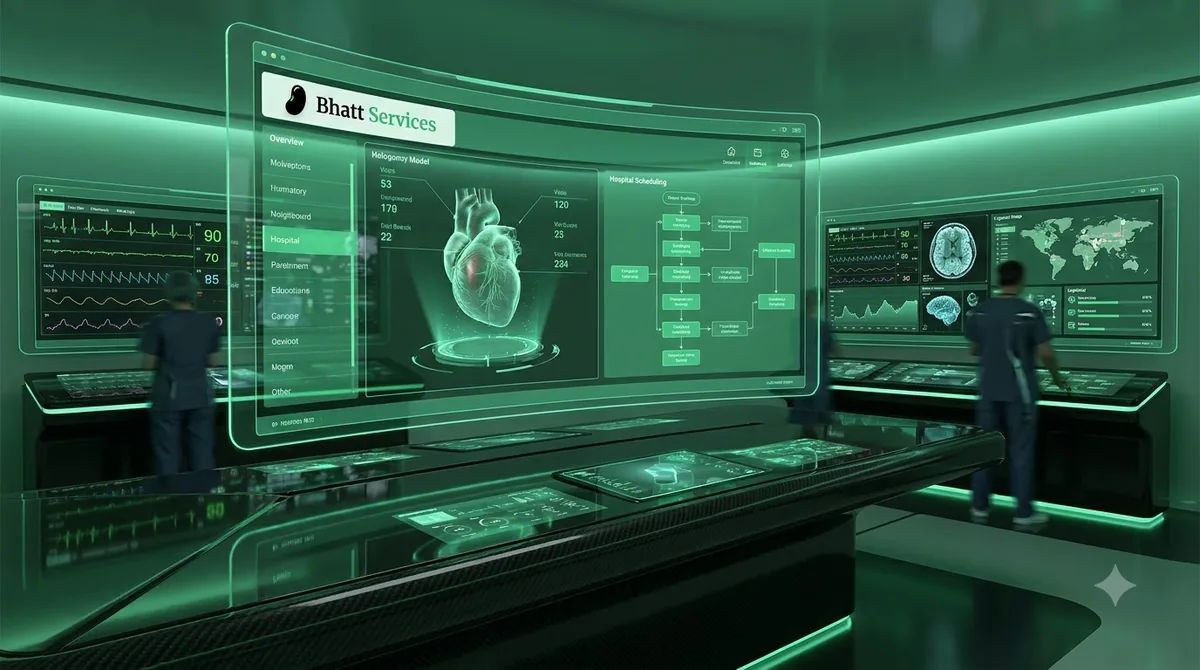
Executive Summary & Architectural Overview
Healthcare software engineering carries a unique moral and operational mandate: downtime and latency do not merely damage conversion rates; they compromise patient outcomes. In modern hospital management, the digital front door is as vital as the physical emergency room. A patient seeking emergency cardiology care or scheduling an urgent oncology consultation cannot tolerate a broken form, an unoptimized mobile UI, or an unresponsive server.
Yet, traditional hospital management systems remain plagued by legacy on-premise architectures, sluggish desktop interfaces, and non-compliant third-party plugins. In 2026, leading healthcare institutions are migrating to Next-Generation Cloud Health Portals. Grounded in our engineering work developing digital infrastructure for premier institutions—including PSP Memorial Super Speciality Hospital ([pspm-hospital.vercel.app](https://pspm-hospital.vercel.app)) and Vaidehi Hospital—this article details the architectural principles required to build HIPAA-compliant, NABH-accredited, lightning-fast hospital ecosystems that serve thousands of concurrent patients and medical staff daily.
Core Pillars of a Modern Hospital Digital Ecosystem
A hospital digital platform must seamlessly integrate four distinct operational domains:
1. Departmental Architecture & Multi-Specialty Navigation
Super speciality hospitals feature 20+ specialized departments (Cardiology, Neurology, Nephrology, Orthopedics, Pediatrics). The platform must organize these medical domains into intuitive, accessible discovery hubs. In our PSP Memorial implementation, each department features structured clinical expertise profiles, consultant doctor rosters, and condition-specific health library resources rendered via static generation for sub-second search indexing.
2. Real-Time OPD Triage & Dynamic Doctor Rostering
Doctor availability in hospitals is fluid due to emergency surgeries and shift rotations. A static schedule causes patient frustration and waiting room congestion. The architecture must stream live doctor availability via WebSockets or Server-Sent Events (SSE), dynamically updating appointment booking slots based on actual operating theater status.
Security, Privacy & NABH / HIPAA Compliance Architecture
Healthcare platforms handle the most sensitive data category in computer science: Protected Health Information (PHI). Compliance is not an afterthought; it is baked into every layer of the infrastructure:
1. Field-Level Cryptographic Encryption
Patient identification numbers, medical histories, and contact phone numbers are encrypted at the column level before being written to disk. Even in the event of an unauthorized database snapshot export, the data remains cryptographically unreadable without hardware-backed KMS keys.
2. Immutable Audit Trails (NABH Digital Mandate)
Under NABH (National Accreditation Board for Hospitals) standards and international HIPAA guidelines, every single interaction with a patient record must be immutably logged:
- Who accessed the record?
- What was the exact timestamp?
- From what IP and physical terminal?
- What specific fields were modified or viewed?
These audit logs are written to append-only write-once-read-many (WORM) storage, ensuring regulatory compliance and complete accountability.
Frontend Performance: Mobile-First Accessibility for Emergency Situations
When a family is rushing a patient to the hospital, they access the website on mobile devices across congested 4G cellular networks. The digital experience must load instantly:
- Sub-Second Initial Load: Public doctor directories, emergency ambulance hotlines, and hospital directions are pre-rendered statically and cached globally on edge CDN nodes.
- Zero Heavy Third-Party Trackers: Marketing trackers, heavy chat widgets, and bloated scripts are strictly banned from emergency and appointment routes.
- Accessible Design Standards (WCAG 2.1 AA): High contrast ratios, accessible screen-reader typography, and intuitive single-tap emergency dialing links ensure that elderly patients or individuals with visual impairments can navigate the hospital portal effortlessly.
Frequently Asked Questions & Implementation Considerations
What are the key features of an enterprise hospital management portal?
An enterprise hospital portal must include real-time doctor appointment scheduling, multi-departmental navigation, automated OPD triage, emergency contact integration, secure lab report delivery, and an educational health library, all built under strict HIPAA and NABH compliance standards.
How does Bhatt Services ensure security and compliance in healthcare applications?
Bhatt Services enforces defense-in-depth security: strict Content Security Policies, TLS 1.3 encryption in transit, AES-256 column-level encryption for patient health information (PHI) at rest, and immutable append-only audit logging for full regulatory compliance.
Why is static site generation (SSG) critical for hospital websites?
In medical emergencies, patients need immediate access to contact numbers, department locations, and doctor availability. Static site generation pre-builds these pages at compile time and distributes them to global edge servers, ensuring pages load in under 200 milliseconds even during high-traffic emergency events or unstable mobile network conditions.