
Physical Literacy Platforms & Early Childhood EdTech: Engineering Scalable Movement Systems for Schools
Architectural blueprint for building early-years physical development platforms, featuring interactive curriculum explorers, low-bandwidth video delivery, and dual institutional onboarding funnels based on First Mile Kids.
Executive Summary & Architectural Overview
In the rapidly evolving landscape of educational technology, physical literacy has long been neglected. While digital platforms for mathematics, coding, and language acquisition have matured into sophisticated adaptive learning environments, early-childhood physical education has remained anchored to unstructured play or static print manuals. Between ages 2 and 8, children undergo their most critical neurodevelopmental window for fundamental movement skills (FMS)—including spatial awareness, bilateral coordination, agility, and vestibular balance.
Bridging this divide requires specialized digital engineering. A modern physical development platform cannot simply be a generic learning management system (LMS); it must function as an interactive, multi-stakeholder ecosystem connecting schools, physical educators, and parents. Drawing directly from our digital engineering work on the First Mile Kids platform ([firstmilekids.in](https://www.firstmilekids.in/)), this article explores the systems architecture required to build high-performance, video-intensive physical literacy platforms that achieve 95+ Google Lighthouse performance scores while onboarding educational institutions at scale.
The Multi-Stakeholder Architectural Model
Unlike traditional single-audience web applications, an early-years physical education platform serves two radically distinct user journeys that must coexist within a unified codebase:
1. The School Infrastructure Portal
Schools require structured, turn-key pedagogical frameworks. The platform must provide school principals and physical education departments with verifiable curriculum alignment (meeting international early-years standards like EYFS and NEP 2020), digital coaching guides, and high-converting onboarding flows that simplify institutional procurement.
2. The Parent Discovery Experience
Parents require confidence, transparency, and accessible visual proof. The user experience must translate complex kinesiological principles into intuitive, playful milestones: How does hopping on one foot translate to cognitive focus? How does bilateral ball handling develop neural pathways for reading?
High-Performance Frontend Engineering: The First Mile Kids Case Study
When engineering the First Mile Kids digital ecosystem, our technical team resolved three core frontend architectural hurdles:
1. The Interactive 360° Curriculum Visualizer
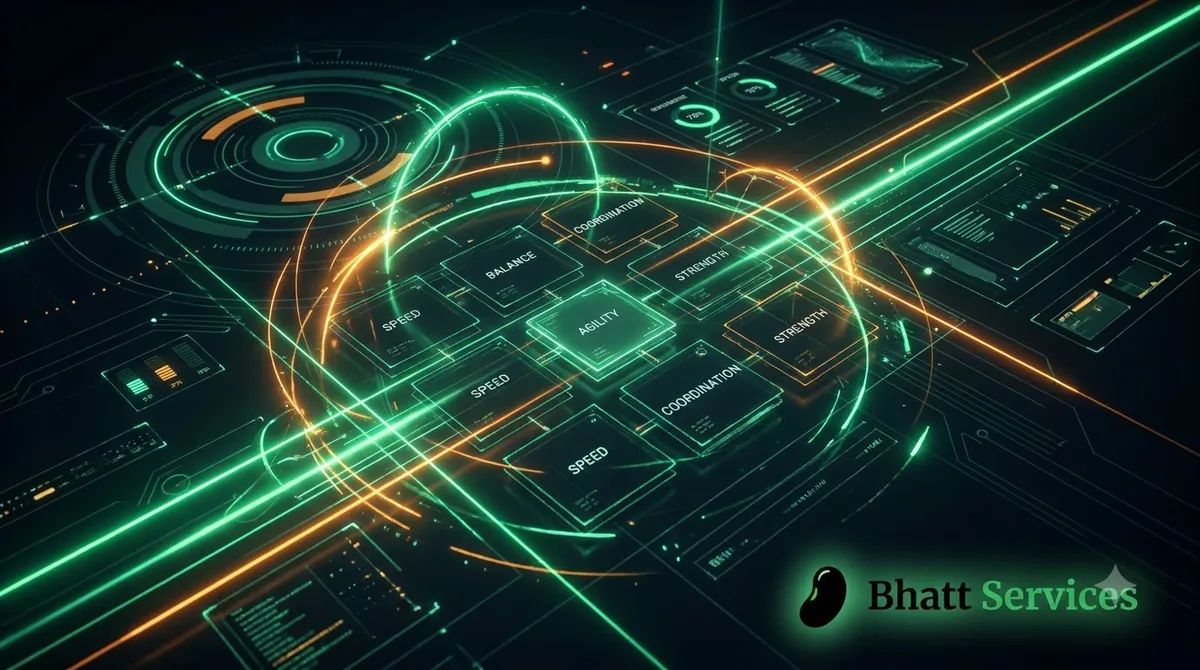
Rather than presenting six separate movement pillars (Movement Skills, Coordination, Strength & Agility, Confidence, Focus, Teamwork) as boring static lists, we engineered a dynamic, touch-optimized circular curriculum visualizer:
By leveraging hardware-accelerated transforms in Framer Motion and ensuring all vector graphics are rendered via lightweight SVGs, the interaction maintains a consistent 60fps frame rate even on low-powered mobile devices in classroom environments.
2. Zero-Jank Video Streaming & Poster Optimization
Video demonstration is central to physical education. However, loading uncompressed MP4 video files on mobile landing pages ruins Core Web Vitals, causing Largest Contentful Paint (LCP) scores to plummet. Our team engineered a progressive video delivery pipeline:
- High-efficiency WebP poster frames are pre-loaded via
<link rel="preload">. - Video streams are encoded into adaptive HLS (HTTP Live Streaming) chunks, ensuring playback begins within 180 milliseconds without buffering.
- Videos are muted and set to
playsinlinewith hardware-accelerated CSS backface visibility controls to eliminate layout shifts during DOM rendering.
3. Edge-Rendered Dynamic Lead Capture
Institutional school inquiries require instant validation and CRM dispatch. We implemented Next.js Server Actions with automatic schema validation (Zod) and direct webhook dispatch to enterprise databases, ensuring school inquiries are captured without third-party JavaScript tracking bloat.
Pedagogical Impact: Quantifiable Physical Literacy Metrics
Engineering physical development platforms requires translating kinesiological benchmarks into quantifiable digital milestones:
| Developmental Pillar | Kinesiological Objective | Digital Tracking Benchmark | | :--- | :--- | :--- | | Locomotor Skills | Bilateral hopping, skipping, directional sprint control | Velocity consistency & directional change accuracy | | Object Control | Hand-eye coordination, catching, dynamic ball striking | Trajectory prediction & reaction latency | | Vestibular Balance | Static and dynamic balance on single-foot pivots | Equilibrium recovery time under dynamic stimuli | | Cognitive Focus | Multi-step instruction execution during movement games | Attention retention score across 30-minute sessions |
Frequently Asked Questions & Implementation Considerations
What is physical literacy in early childhood education?
Physical literacy is the foundational competence, confidence, and motivation for children aged 2 to 8 to engage in purposeful movement throughout life. It encompasses locomotor skills (running, hopping), manipulative skills (catching, kicking), and vestibular balance, which directly correlate with cognitive development and academic focus.
How does First Mile Kids approach early-years physical development?
First Mile Kids partners with schools to implement a structured, movement-first physical education curriculum for children aged 2 to 8. Rather than focusing on competitive sports, it develops six core physical literacy pillars: Movement Skills, Coordination, Strength & Agility, Confidence, Focus, and Teamwork.
What technical stack is best suited for video-rich EdTech portals?
Next.js with React Server Components, Tailwind CSS, and Framer Motion provides the ideal architecture for video-rich EdTech portals. Utilizing adaptive streaming (HLS) with WebP image preloading guarantees fast load times, sub-second LCP scores, and fluid interactive curriculum navigation across mobile and desktop devices.